
How to Choose Climbing Shoes
The Complete Guide to Better Climbing Performance and how to choose climbing shoes
Why the Right Climbing Shoe Can Transform the Way You Climb
By Kostas Grafanakis – Certified Climbing Instructor, Route Developer & 8b Sport Climber
Reading time: 15 minutes
Last updated: June 2026
Quick Answer
Choosing the right climbing shoe depends on five key factors:
Your climbing experience
Your foot shape
The type of climbing you do most
The terrain you climb on
Finding the right balance between comfort and performance
A climbing shoe should fit snugly, with no empty space around the heel or toes, but it should never cause unbearable pain. Beginners generally benefit from comfortable, neutral shoes, while experienced climbers often prefer more aggressive models that provide greater precision on steep terrain.
The most expensive shoe isn't necessarily the best one.
The best climbing shoe is the one that fits your foot, supports your climbing style, and helps you trust every foot placement.
Your Climbing Doesn't Start With Your Hands
Most climbers believe climbing is about strong fingers.
They're wrong.
One of the first things I notice when coaching is how much attention climbers give to their hands and how little attention they give to their feet. They'll spend months training finger strength, buying hangboards and following complicated training plans, yet they'll continue climbing in shoes that don't fit properly or don't suit the type of climbing they actually do.
After coaching hundreds of climbers in Leonidio, I've learned that progress rarely comes from pulling harder.
It comes from standing better.
Your legs are significantly stronger than your arms. Every efficient climbing movement begins by transferring power through your feet. When your feet are placed accurately and confidently, your arms work less, your body stays balanced, and climbing becomes smoother, more efficient and, perhaps most importantly, more enjoyable.
That connection between your body and the rock exists through just one piece of equipment.
Your climbing shoes.
Whether you're stepping onto an indoor wall for the first time or trying to redpoint your first 8a outdoors, your shoes influence every move you make. They determine how confidently you stand on a tiny edge, how securely you smear across polished limestone, and how precisely you hook your heel around a tufa.
A good climbing shoe doesn't magically make you climb harder.
It allows you to use the technique you already have.
Instructor's Note
During almost every beginner course in Leonidio, I ask climbers to repeat one simple exercise: climb an easy route using only one hand whenever possible. At first, they struggle. Then they discover something surprising—they're capable of standing on much smaller footholds than they ever trusted before. The lesson isn't about strength; it's about learning to rely on your feet.
Experience Matters

Over the past years I've climbed thousands of pitches across Europe, equipped new sport routes, coached climbers from complete beginners to experienced athletes and climbed sport routes up to 8b.
Most of that time has been spent on limestone, particularly in Leonidio—one of the world's premier sport climbing destinations.
Leonidio offers almost every style of climbing imaginable. Long endurance routes, technical vertical walls, razor-sharp edges, delicate slabs, steep caves, pockets and tufas can all be found within a short drive.
This diversity has taught me something very important.
There isn't one perfect climbing shoe.
There is only the right climbing shoe for a particular climber, on a particular route, at a particular moment.
That's exactly what this guide will help you discover.
Why Climbing Shoes Matter More Than Most Climbers Realise
Imagine driving a high-performance sports car with worn-out tyres.
The engine still produces the same power.
The driver still has the same skill.
But the connection with the road has disappeared.
Climbing works in exactly the same way.
Your climbing shoe is the only point of contact between your body and the rock.
Every movement depends on it.
Every smear.
Every edge.
Every heel hook.
Every toe hook.
Every drop knee.
Every dynamic movement starts with your feet.
If your shoe doesn't allow you to trust a foothold, you'll instinctively compensate by pulling harder with your arms.
That creates tension.
Tension creates fatigue.
Fatigue causes mistakes.
Many climbers believe they need stronger fingers when what they actually need is greater confidence in their feet.
One of the most rewarding moments during a coaching session is watching someone realise that they can stand comfortably on holds they previously ignored. Often, nothing has changed except their confidence, their body position and the way their shoes fit.
The transformation can be immediate.
Good climbing isn't about pulling harder.
It's about standing better.
The Anatomy of a Climbing Shoe
Before choosing a climbing shoe, it's worth understanding how one actually works.
Although climbing shoes appear simple, every component has been designed to solve a specific problem.
Each part influences how the shoe feels on the rock and how efficiently it transfers power from your body into the foothold.
The Upper
The upper is the main body of the shoe.
It may be made from leather, synthetic materials or a combination of both.
Leather generally stretches over time and gradually moulds to your foot.
Synthetic uppers maintain their original shape more consistently and usually stretch far less.
Neither is inherently better.
Some climbers value the personalised fit of leather, while others prefer the predictable sizing of synthetic shoes.
The Midsole
Hidden inside the shoe is the midsole.
This is one of the most important but least understood components.
A stiff midsole offers excellent support on tiny edges, helping reduce foot fatigue during long climbing days.
A softer midsole allows the shoe to flex more naturally, increasing sensitivity and making it easier to smear on friction-dependent terrain.
Neither option is always superior.
It depends entirely on the climbing you enjoy.
The Rubber
The sole is where performance meets the rock.
Different rubber compounds are designed to balance friction, durability and sensitivity.
Softer rubber generally provides greater grip and sensitivity, making it popular for steep sport climbing and modern bouldering.
Harder rubber usually offers better edging support and tends to last longer, making it an excellent choice for sustained limestone routes.
The quality of the rubber matters.
But fit matters even more.
Even the best rubber cannot compensate for a poorly fitting shoe.
The Rand
Many climbers have never heard the word "rand," despite relying on it every time they climb.
The rand is the rubber that wraps around the toe and sides of the shoe.
It helps maintain the shoe's shape, protects it from abrasion and plays a significant role during toe hooks and powerful foot placements.
A worn rand doesn't simply look old.
It changes the way the shoe performs.
The Heel
A secure heel is essential.
If your heel lifts inside the shoe while heel hooking, valuable energy is lost and precision disappears.
A properly fitted heel should feel secure without uncomfortable pressure.
There should be no significant empty space inside the heel cup.
Closure Systems
Finally, the closure system determines how the shoe fits around your foot.
Velcro shoes are quick to remove between attempts and have become the preferred choice for many sport climbers.
Lace-up shoes allow exceptionally precise adjustment and remain popular for long routes and traditional climbing.
Slippers offer maximum sensitivity with minimal structure, making them favourites for certain styles of bouldering and indoor climbing.
Each system has advantages.
The best choice depends on how and where you climb.
Understanding Performance
When climbers compare shoes, they often focus on brand names or colour.
Experienced climbers think differently.
Instead, they evaluate every shoe according to five performance characteristics:
Precision – How accurately can the shoe stand on very small footholds?
Sensitivity – How well can you feel the rock beneath your foot?
Support – How effectively does the shoe reduce fatigue during long climbs?
Friction – How confidently does the rubber grip different rock textures?
Comfort – Can you wear the shoe long enough to climb at your best?
Every climbing shoe is a compromise between these five characteristics.
No shoe can maximise all of them simultaneously.
That's why choosing the right climbing shoe isn't about finding the "best" model.
It's about understanding which compromises best suit your climbing.
In the next section, we'll explore how different shoe shapes influence these characteristics—and why an aggressive shoe isn't always the right choice.
Choosing the Right Climbing Shoe
Now that you understand how a climbing shoe works, the next question is the one every climber eventually asks:
"Which climbing shoe is right for me?"
Unfortunately, there isn't a simple answer.
Every year I meet climbers in Leonidio who arrive wearing expensive, high-performance shoes that don't suit their feet, their climbing style or even their current level. Many bought them because they saw a professional athlete wearing them or because someone in the climbing gym recommended them.
A climbing shoe should never be chosen based on popularity.
It should be chosen based on purpose.
Think of climbing shoes like tyres on a car. You wouldn't use Formula 1 tyres on a gravel road, and you wouldn't drive a rally car with slick racing tyres. Both are exceptional products—but only when used in the right environment.
Climbing shoes work exactly the same way.
The best shoe is not the most aggressive one.
The best shoe is the one that allows you to climb at your best.
Understanding Climbing Shoe Shapes
One of the biggest differences between climbing shoes is their shape.
This influences comfort, precision, power and how the shoe performs on different terrain.
Generally, climbing shoes fall into three categories.
Neutral Shoes
Neutral shoes have a relatively flat profile that allows the toes to rest in a more natural position.
These shoes prioritise comfort over maximum performance.
For beginners, this is usually the smartest choice.
A comfortable shoe encourages longer climbing sessions, better footwork and a more enjoyable learning experience. When you're new to climbing, your biggest challenge isn't standing on microscopic footholds—it's learning movement, balance and body positioning.
Neutral shoes are also excellent for:
Multi-pitch climbing
Long indoor sessions
Climbing courses
All-day guiding
Recreational climbers
Many experienced climbers continue to use neutral shoes because comfort becomes increasingly valuable on long climbing days.
Moderate Shoes
Moderate shoes sit comfortably between beginner and high-performance models.
They introduce a slight downturn and a more asymmetric shape while remaining comfortable enough for extended use.
For many climbers, this is the ideal balance.
Moderate shoes edge more confidently than neutral models while still allowing enough comfort for multiple routes throughout the day.
If your climbing is progressing through the French grades of 6a to 7a, this category often provides the greatest improvement in performance without sacrificing comfort.
Many climbers spend years using moderate shoes as their primary outdoor shoe.
Aggressive Shoes
Aggressive shoes are designed for performance.
Their downturned shape places the foot in a position that generates greater power through the big toe, allowing precise movements on steep terrain.
These shoes excel on:
Overhanging sport routes
Bouldering
Roof climbing
Powerful toe hooks
Technical heel hooks
Difficult redpoints
However, they are often misunderstood.
Many beginners believe aggressive shoes will automatically improve their climbing.
They won't.
In fact, they can slow progress.
When a climber is still developing basic footwork, balance and movement, a highly aggressive shoe often creates unnecessary discomfort without providing meaningful performance gains.
As an instructor, I rarely recommend an aggressive shoe as someone's first climbing shoe.
Technique develops before equipment.
Not the other way around.
Soft vs Stiff Climbing Shoes
Another important characteristic is stiffness.
Some shoes are incredibly soft.
Others feel almost rigid.
Neither is universally better.
They simply solve different problems.
Soft Shoes
Soft shoes allow your foot to flex naturally.
This increases sensitivity, making it easier to feel the rock beneath your feet.
They perform exceptionally well on:
Slabs
Indoor volumes
Modern competition climbing
Smearing
Steep climbing that relies on friction
The trade-off is reduced support on tiny edges.
After long routes, your feet may fatigue more quickly.
Stiff Shoes
Stiffer shoes distribute force more effectively across the sole.
Rather than relying entirely on foot strength, the shoe itself helps support your weight.
This makes edging easier and reduces fatigue during sustained climbing.
Stiff shoes often perform better on:
Vertical limestone
Tiny edges
Long sport routes
Traditional climbing
Multi-pitch climbing
For climbers spending full days on the rock, that additional support can make a significant difference.
Choosing the Right Closure System
The way your shoe closes may seem like a small detail, but it affects convenience, fit and performance.
Velcro
Velcro has become the preferred choice for many sport climbers.
It's quick.
It's practical.
Between attempts you can loosen the straps, relax your feet and tighten them again within seconds.
This is one of the reasons I personally prefer Velcro shoes for most of my climbing.
During long days of route development or projecting, constantly removing and replacing shoes becomes part of the routine.
Velcro simply makes that process easier.
Lace-Up
Laces offer the most adjustable fit.
They allow you to fine-tune pressure across different parts of the foot, making them popular for long routes and climbers whose feet don't perfectly match standard shoe shapes.
The downside is speed.
Laces take longer to adjust between climbs.
Slippers
Slippers maximise sensitivity.
Without straps or laces, they create a close connection between foot and rock.
Many indoor climbers and boulderers appreciate this simplicity.
However, they generally provide less support than structured shoes.
Foot Shape Matters More Than Shoe Size
This is probably the single most overlooked aspect of buying climbing shoes.
Every foot is different.
Some climbers have:
Wide forefeet
Narrow heels
High arches
Low-volume feet
Long second toes
Broad toe boxes
A shoe that feels perfect for your climbing partner may feel completely wrong on your foot.
This is why online recommendations should always be treated with caution.
When helping climbers choose shoes during courses in Leonidio, I rarely begin by asking what grade they climb.
Instead, I look at their feet.
How wide is the forefoot?
Does the heel move?
How much volume do they have?
Where do pressure points appear?
These answers often tell me more than the shoe size printed on the box.
Understanding Foot Types
Although every foot is unique, three general shapes appear frequently.
Egyptian Foot
The big toe is the longest.
Each toe gradually becomes shorter.
This is the most common foot shape worldwide.
Many climbing shoes are designed with this profile in mind.
Greek Foot
The second toe is longer than the big toe.
Climbers with Greek feet often experience pressure around the second toe when wearing shoes designed for Egyptian feet.
Finding the correct toe box shape becomes especially important.
Roman Foot
The first three toes are similar in length.
This creates a broader forefoot and often requires shoes with a wider toe box.
Comfort becomes particularly dependent on choosing the correct last.
Choosing Shoes for Your Climbing Style
One shoe rarely performs perfectly everywhere.
Think about where you spend most of your climbing time.
Indoor Climbing
Modern climbing gyms feature large volumes, dynamic movement and friction-dependent climbing.
Soft, sensitive shoes often perform exceptionally well here.
Outdoor Sport Climbing
Sport climbing demands versatility.
You'll encounter slabs, vertical walls, overhangs and technical sequences, often within the same route.
A balanced shoe that combines edging power with sensitivity is usually the most practical choice.
Multi-pitch Climbing
Comfort becomes increasingly important.
A shoe that feels amazing for six minutes may become unbearable after six hours.
Many experienced multipitch climbers intentionally sacrifice a little precision in exchange for comfort.
Bouldering
Power, toe hooks and heel hooks dominate.
Aggressive, sensitive shoes often provide the greatest advantage.
Choosing Shoes for Limestone

Living and climbing in Leonidio has shaped the way I think about climbing shoes.
Leonidio isn't defined by a single climbing style.
One day you might spend hours climbing technical slabs that demand absolute precision.
The next day you'll be pulling through steep tufas or standing on razor-sharp pockets for thirty metres.
That variety is one of the reasons climbing here is so rewarding.
It's also why I believe versatility matters.
For limestone climbing, I look for three qualities above everything else:
Reliable edging on tiny holds.
Enough sensitivity to trust smears on polished rock.
A secure heel and toe for modern movement on steep terrain.
A shoe that combines those characteristics becomes far more valuable than one that excels in only a single situation.
In the final chapter, I'll explain why this philosophy eventually led me to choose SCARPA as my preferred climbing footwear, why the Instinct VS has become my personal choice for most routes, and how you can decide which SCARPA model best matches your own climbing goals.
The Biggest Mistakes Climbers Make When Buying Shoes
After years of coaching climbers of every level, I've realised that most climbing shoe problems don't come from the shoes themselves—they come from the way we choose them.
Here are the mistakes I see most often.
Buying the Shoe Instead of the Fit
The climbing community loves discussing brands and models.
But here's the truth:
Fit is more important than the logo on the shoe.
I've seen climbers improve simply by switching to a shoe that matched their foot shape better, even when the new shoe was less aggressive than the previous one.
A perfectly fitted shoe from almost any reputable manufacturer will outperform an uncomfortable shoe that doesn't suit your foot.
Buying Shoes That Are Too Small
For many years, climbers believed that the tighter the shoe, the better the performance.
Fortunately, that mentality is slowly disappearing.
Modern climbing shoes are engineered to perform without extreme downsizing.
Your toes should be comfortably curled.
Your heel should feel secure.
There should be no empty space inside the shoe.
But you shouldn't feel unbearable pain.
If you're removing your shoes after every single route because they're impossible to wear, they're probably too small.
Pain isn't performance.
Confidence is.
Buying an Aggressive Shoe Too Early
One of the biggest myths in climbing is that aggressive shoes make you climb harder.
They don't.
Technique comes first.
A beginner climbing in an advanced shoe won't magically improve.
In fact, discomfort often distracts new climbers from learning proper movement and body positioning.
Master your footwork first.
Then let your equipment evolve alongside your climbing.
Ignoring Footwork
As an instructor, I often tell climbers something that surprises them.
The solution to slipping isn't always buying new shoes.
Sometimes it's learning to trust the ones you already have.
Poor body position.
A dropped heel.
Rushed movement.
Looking at your hands instead of your feet.
These are far more common reasons for slipping than worn rubber.
The best shoe in the world can't compensate for poor technique.
But good technique allows almost any quality shoe to perform well.
Taking Care of Your Climbing Shoes
Climbing shoes are an investment.
With proper care, a quality pair can perform well for years and often be resoled several times before replacement becomes necessary.
Fortunately, maintenance is simple.
After every climbing day:
Let your shoes dry naturally.
Never leave them inside a hot car.
Remove dust and chalk from the rubber.
Store them somewhere dry and ventilated.
Before difficult attempts, wipe the sole with your hand or a damp cloth.
Clean rubber grips better.
Small habits like these preserve both performance and durability.
Why I Choose SCARPA
People often ask me why I climb almost exclusively in SCARPA shoes.
The answer isn't because of sponsorship.
It's because of experience.
Long before I became part of the SCARPA family through XCOSports, I had already spent years trying different climbing shoes on limestone, granite, sandstone and indoor walls.
Over time, I found myself returning to SCARPA for one simple reason:
Consistency.
When I buy a SCARPA climbing shoe, I know exactly what level of craftsmanship, fit and performance to expect.
The company has spent decades refining climbing footwear, producing models that cover every level—from first-time climbers to elite competition athletes.
As a climbing instructor, I also appreciate something that often goes unnoticed.
Not every climber needs the same shoe.
SCARPA understands this.
Rather than producing one "do everything" model, the range offers different solutions for different feet, different climbing styles and different objectives.
That makes it much easier to recommend a shoe based on the climber standing in front of me rather than simply recommending my personal favourite.
I believe that is how climbing equipment should be chosen.
Not according to trends.
According to individual needs.
Which SCARPA Shoe Would I Recommend?
One of the advantages of the SCARPA range is that there isn't a single model for everyone.
Instead, different shoes are designed to solve different problems.
If you're buying your first pair of climbing shoes, I'd suggest starting with a comfortable, supportive model like the Origin VS. It provides confidence, all-day comfort and allows beginners to focus on developing technique instead of fighting painful footwear.
If you spend most of your time climbing indoors, particularly on modern volumes and coordination-style problems, the Veloce offers outstanding sensitivity and comfort for long training sessions.
For climbers looking for one versatile sport climbing shoe, the Arpia V is an excellent choice. It strikes a balance between precision and comfort, making it suitable for a wide range of climbing styles.
For climbers pushing into more difficult grades, especially on limestone, I often recommend the Instinct VS. It combines excellent edging, a secure heel and enough sensitivity to perform across a wide variety of terrain.
If your focus is steep caves, powerful bouldering or modern competition-style movement, models like the Drago provide the softness and precision needed for highly technical climbing.
And for climbers spending full days on long routes or multi-pitch adventures, the Vapor V offers additional support while remaining comfortable enough for extended use.
The important point is this:
Choose the shoe that matches your climbing—not the one with the highest performance rating.
Why the Instinct VS Is My Personal Favourite
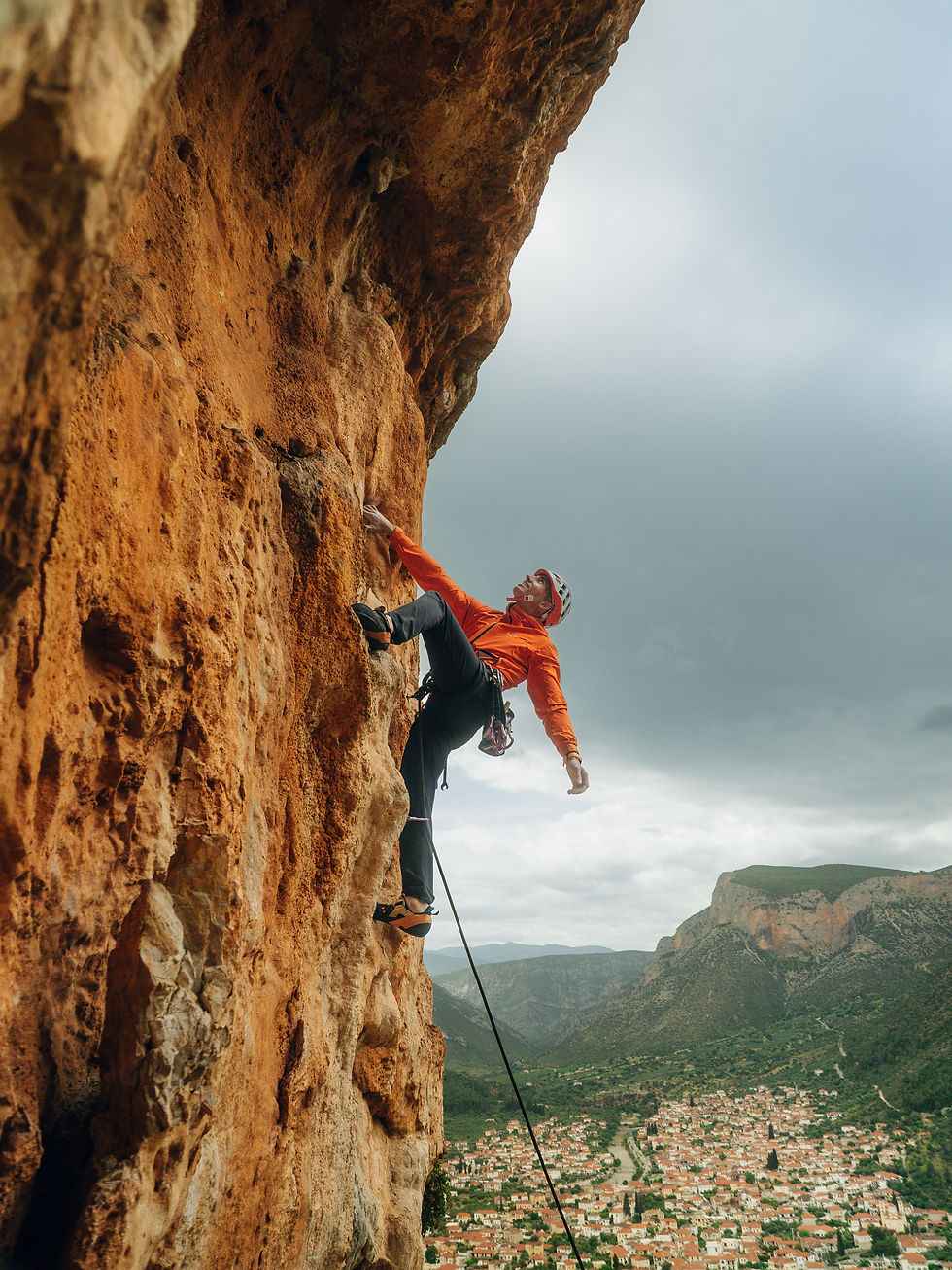
If I could own only one climbing shoe for the majority of my climbing, it would be the SCARPA Instinct VS.
Not because it's the newest model.
Not because it's the most aggressive.
And certainly not because I work with SCARPA.
It's because, after thousands of pitches, it continues to offer the balance I value most.
Leonidio demands versatility.
One route may require standing on tiny limestone edges for thirty metres.
The next may involve powerful toe hooks through steep tufas before finishing on delicate slabs.
The Instinct VS adapts remarkably well to all of these situations.
For me, it delivers:
Outstanding edging on vertical limestone.
A secure heel for technical movement.
Excellent toe precision on pockets.
Enough sensitivity to trust smears.
Comfort that allows me to wear it throughout long climbing days.
No climbing shoe is perfect for everyone.
But for my feet, my climbing style and the type of routes I climb most often, it remains the shoe I reach for first.
Frequently Asked Questions
Should climbing shoes hurt?
No. They should feel snug and secure but should never cause severe pain or numbness.
Should beginners buy aggressive climbing shoes?
Usually not. Comfort and technique are far more important during the early stages of climbing.
Can climbing shoes stretch?
Yes. Leather shoes generally stretch more than synthetic models, although modern climbing shoes stretch far less than they once did.
How long do climbing shoes last?
It depends on how often you climb, the type of rock and your footwork. Many quality shoes can be resoled several times before replacement.
Is resoling worth it?
Absolutely. Resoling a premium climbing shoe is often more economical than buying a new pair and allows you to keep a shoe that already fits your foot perfectly.
Final Thoughts
After years of climbing, coaching and developing routes, one lesson has remained constant.
The strongest climbers aren't always the ones with the strongest fingers.
They're the ones who trust their feet.
Choosing the right climbing shoe won't instantly increase your climbing grade.
It won't replace good technique.
It won't compensate for poor movement.
What it will do is remove one of the biggest barriers between you and the rock.
The right shoe allows you to stand with confidence, move with precision and conserve energy for the moments that matter most.
Whether you're buying your very first pair or searching for your next high-performance model, remember that climbing shoes are tools—not trophies.
Choose the shoe that fits your foot, your climbing style and your goals.
If you're unsure where to begin, ask an experienced instructor, try on several models and don't be afraid to prioritise comfort over trends.
Your future self will thank you.
For me, after years of climbing around the world and spending countless days on the limestone of Leonidio, that journey has led me to SCARPA and, more specifically, to the Instinct VS.
Your journey may lead somewhere different.
And that's perfectly fine.
Because the best climbing shoe is, and always will be, the one that gives you the confidence to trust your feet.
About the Author
Kostas Grafanakis is a certified climbing instructor based in Leonidio, Greece. He has climbed sport routes up to 8b, equipped hundreds of climbing routes, coached climbers from beginners to advanced athletes, and organises climbing courses, coaching programmes and guiding experiences in one of the world's premier limestone climbing destinations.
His philosophy is simple:
Climb smarter. Move better. Trust your feet.
Continue Your Climbing Journey
If you're planning to climb in Leonidio and would like personalised advice on choosing climbing shoes, improving your technique or progressing safely, you're welcome to join one of my coaching sessions or guided climbing experiences.
Sometimes a small adjustment in footwork—or simply wearing the right shoe—can make a bigger difference than months of training.
I look forward to climbing with you on the incredible limestone of Leonidio.


Comments